🚨 💬
Language:

No language found.

|
Saathora
Arthritis

Arthritis

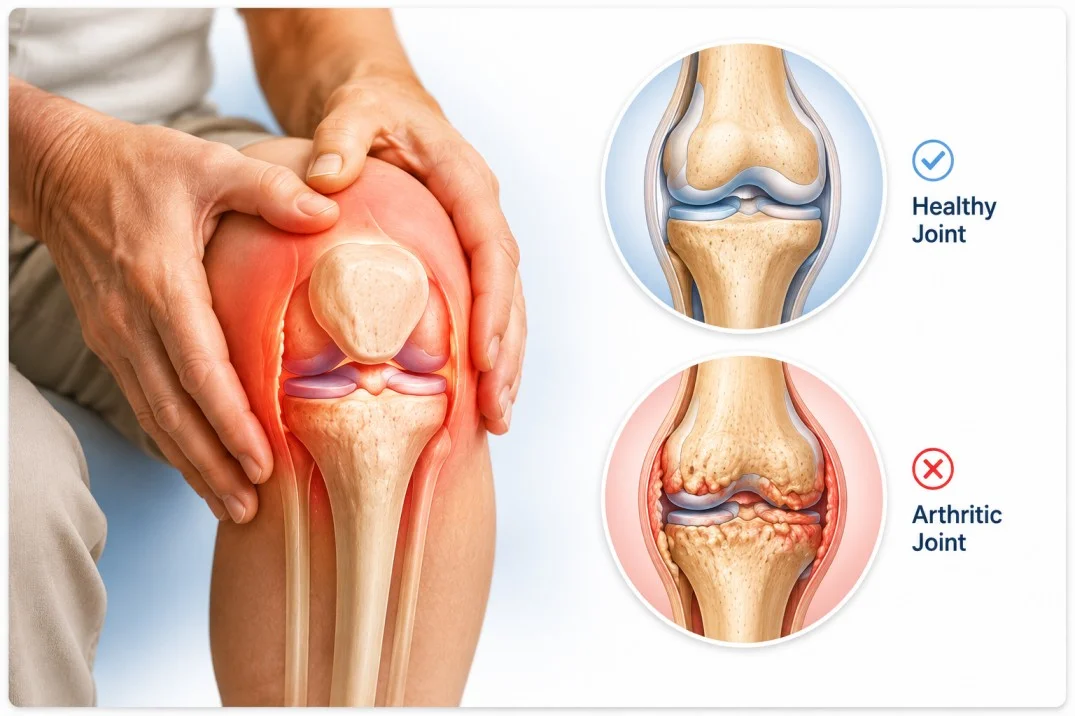
Arthritis is an inflammation of one or more joints, causing pain, stiffness, swelling, and decreased range of motion, commonly affecting the hands, knees, hips, and spine.

What is this disease?

Inflammation of one or more joints, causing pain and stiffness.

Symptoms

  • Joint Pain and Tenderness moderate

    Persistent aching, soreness, or tenderness in one or more joints, often worsening during movement or after prolonged activity.

  • Morning Joint Stiffness mild

    Stiffness and difficulty moving joints upon waking up in the morning or after prolonged periods of inactivity, lasting anywhere from 30 minutes to a few hours.

  • Joint Swelling and Inflammation moderate

    Soft tissue swelling, fluid accumulation, or localized warmth around the affected joints due to active inflammation.

  • Reduced Range of Motion & Flexibility severe

    Progressive difficulty in fully bending, extending, or rotating joints, leading to impaired daily mobility and function.

  • Crepitus (Grating or Popping Sensation) mild

    A crunching, popping, or grating feeling or sound heard when moving damaged joints, caused by bone rubbing against bone or worn cartilage.

Causes & risk factors

  • Joint Wear and Tear (Cartilage Degeneration) cause

    Natural breakdown and progressive erosion of protective joint cartilage over time, leading to friction, pain, and stiffness (primary cause of Osteoarthritis).

  • Autoimmune Malfunction genetic

    An overactive immune system mistakenly attacks the body's own joint tissues and synovial lining, causing chronic inflammation and potential joint deformity (e.g., rheumatoid arthritis).

  • Advanced Age and Family History risk factor

    Increasing age naturally wears down cartilage, and having family members with arthritic conditions elevates individual genetic susceptibility.

  • Joint Injuries and Repetitive Stress environmental

    Previous joint trauma (such as sports injuries or fractures) or repetitive occupational stresses accelerate structural cartilage damage and predispose joints to post-traumatic arthritis.

  • Previous joint trauma (such as sports injuries or fractures) or repetitive occupational stresses accelerate structural cartilage damage and predispose joints to post-traumatic arthritis. lifestyle

    Carrying excess body weight places disproportionate mechanical stress on weight-bearing joints (hips, knees, and spine) and releases inflammatory proteins that aggravate joint degeneration.

Diagnosis / tests

  • Physical Examination & Joint Assessment

    A comprehensive physical check by a physician evaluating joints for swelling, redness, warmth, range of motion, stability, and localized tenderness.

  • Joint X-rays (Radiography)

    Imaging test that detects cartilage loss, bone-on-bone joint space narrowing, bone spurs (osteophytes), and structural bone damage characteristic of osteoarthritis or severe inflammation.

  • Blood Tests (Rheumatoid Factor & Anti-CCP)

    Laboratory blood analysis to check for specific autoantibodies (RF and anti-cyclic citrullinated peptide) to diagnose autoimmune conditions such as Rheumatoid Arthritis.

  • Inflammatory Marker Panel (ESR & CRP)

    Blood tests measuring Erythrocyte Sedimentation Rate (ESR) and C-Reactive Protein (CRP) to detect and quantify systemic inflammation in the body.

  • Joint Fluid Analysis (Arthrocentesis)

    A procedure using a fine needle to draw synovial fluid from an inflamed joint to test for uric acid crystals (gout), bacterial infection (septic arthritis), or inflammatory markers.

First aid / immediate care

Apply cold packs to acute swollen joints for 15–20 minutes, rest the affected limb, elevate the joint if possible, and use supportive braces or compression wraps to ease discomfort.
  1. Rest and Support the Affected Joint

    Stop physical activity immediately, sit or lie down comfortably, and position the affected joint in a supported, relaxed posture to minimize mechanical stress and pain.

  2. Apply Temperature Therapy (Cold or Warm Compress)

    Apply an ice pack wrapped in a cloth to acute, swollen joints for 15–20 minutes to reduce swelling. For chronic muscle tightness or non-swollen stiff joints, apply a warm compress.

  3. Elevate and Apply Light Compression

    Elevate the swollen joint (such as an ankle or knee) above heart level if comfortable, and use an elastic compression bandage gently to help manage swelling without restricting blood flow.

  4. Take Over-the-Counter Pain Relief

    Take non-prescription analgesics or anti-inflammatory medications (such as acetaminophen or ibuprofen) as previously recommended by a healthcare provider for flare-ups.

  5. Seek Immediate Care for Suspected Joint Infection or Trauma Emergency

    Contact emergency medical services if severe joint pain occurs alongside a high fever, severe skin redness/warmth surrounding the joint, inability to bear any weight, or after a traumatic fall/injury.

Treatment

Educational information only — not a personal prescription. Always consult a qualified clinician.

Treatment includes pain relievers (NSAIDs, acetaminophen), disease-modifying anti-rheumatic drugs (DMARDs) for autoimmune forms, physical therapy, joint injections, and surgical options like joint replacement in severe cases.
  • Non-Steroidal Anti-Inflammatory Drugs (NSAIDs) & Pain Relievers medication

    Oral or topical medications (such as ibuprofen, naproxen, or acetaminophen) are used to reduce joint inflammation, manage swelling, and alleviate mild-to-moderate arthritis pain.

  • Physical & Occupational Therapy therapy

    Targeted exercise programs and custom movement techniques designed by physical therapists to strengthen muscles around affected joints, restore flexibility, and preserve range of motion.

  • Disease-Modifying Anti-Rheumatic Drugs (DMARDs) medical

    Prescribed medications (such as methotrexate or biologics) for autoimmune arthritis types (e.g., Rheumatoid Arthritis) to slow disease progression and prevent permanent joint damage.

  • Corticosteroid Joint Injections procedure

    Direct targeted injections of corticosteroid medication into severe, painfully inflamed joint spaces to provide rapid, localized anti-inflammatory relief lasting several weeks to months.

  • Total Joint Replacement (Arthroplasty) surgery

    Surgical procedure to remove damaged joint cartilage and bone surfaces, replacing them with artificial prosthetics (metal, plastic, or ceramic) for end-stage joint damage.

Prevention / protection

Prevent joint damage by maintaining a healthy weight, protecting joints during physical activities, staying physically active with low-impact exercises, avoiding repetitive joint stress, and refraining from smoking.
  • Maintain a Healthy Body Weight

    Excess weight places added pressure on weight-bearing joints like knees and hips. Losing weight helps reduce mechanical strain and slows joint wear.

  • Protect Joints During Daily Activities

    Practice proper lifting techniques, use joint-friendly body mechanics, and wear protective equipment during sports or heavy physical labor to prevent joint injuries.

  • Stay Active with Low-Impact Exercise

    Engage in regular low-impact activities like swimming, cycling, and walking to keep surrounding joint muscles strong, flexible, and supportive.

  • Avoid Tobacco Smoke

    Quitting smoking reduces systemic inflammation and lowers the risk of developing autoimmune forms of arthritis like rheumatoid arthritis.

Diet & lifestyle

Lifestyle

Incorporate daily gentle range-of-motion exercises, utilize ergonomic tools to reduce joint strain, alternate between rest and activity, and practice hot/cold therapy for symptom management.

Diet

Eat an anti-inflammatory diet rich in omega-3 fatty acids (salmon, walnuts), colorful fruits, vegetables, whole grains, and calcium/vitamin D to support overall joint and bone health.

Things to avoid

Avoid high-impact exercises that stress joints, prolonged physical inactivity, high-sugar and highly processed foods, excess alcohol, tobacco smoke, and lifting heavy objects without proper form.
  • Consume Anti-Inflammatory Foods diet

    Focus on a Mediterranean-style diet rich in omega-3 fatty acids (fatty fish, flaxseeds), leafy greens, berries, nuts, and olive oil to fight inflammation.

  • Range-of-Motion & Flexbility Routines exercise

    Perform daily stretching and low-impact cardiovascular exercises to maintain joint mobility, prevent stiffness, and build joint-supporting muscles.

  • Avoid Refined Sugars & Processed Foods things to avoid

    Limit consumption of sugary drinks, fried foods, refined carbs, and excess red meat, which can trigger systemic inflammatory responses.

  • Hot and Cold Therapy lifestyle

    Use warm baths or heating pads to relax stiff joints in the morning, and apply ice packs to acute swollen joints after physical activity.

Warning signs & when to seek care

Watch for persistent joint swelling, morning stiffness lasting longer than 30–60 minutes, warmth or redness around a joint, progressive loss of joint mobility, and joint deformities.
  • Sudden Joint Swelling with Redness & Warmth Emergency

    Rapid onset of intense joint swelling accompanied by severe heat and redness around the joint tissue.

  • High Fever Accompanying Joint Pain Emergency

    Joint pain presenting alongside chills and a high fever, which can indicate a dangerous infection inside the joint space (Septic Arthritis).

  • Progressive Joint Deformity or Loss of Function

    Noticeable structural changes in joint alignment or an inability to use the joint for basic tasks.

When should I see a doctor?

Schedule a doctor's visit if you experience unexplained joint pain or stiffness lasting more than a few days, swelling that doesn't improve with rest, or difficulty performing daily activities.

Emergency warning

Seek immediate emergency medical attention if joint pain is accompanied by a sudden high fever, severe redness and warmth surrounding the joint, inability to bear weight, or following severe traumatic injury.

Find the right specialist

For Arthritis, patients commonly consult a General Medicine specialist.

Recommended doctors

DR. NAZIM KAJANI

MBBS, MS (Ortho/OSM) Trauma and accident care Rheumatology Chronic Pain Management

  • Experience: 14 years
  • Hospital: MEDI STAR Hospital
  • Fee: ₹1,500

Dr. Elena Rostova

MBBS, MS (Orthopedics), M.Ch

  • Experience: 12 years
  • Hospital: City Health Clinic
  • Fee: ₹1,200

DR. KIRAN KUMAR

MBBS, MD (General Medicine)

  • Experience: 8 years
  • Hospital: MEDI STAR Hospital
  • Fee: ₹600

DR. SRUJANA KOMMALAPATI

MBBS, MD (Internal Medicine)

  • Experience: 5 years
  • Hospital: MEDI STAR Hospital
  • Fee: ₹2,000

See all matching doctors →

Nearby / matching hospitals

Health packages

Essential Wellness Screening

General Care

₹1,499

FAQs

What is the main difference between Osteoarthritis and Rheumatoid Arthritis?
Osteoarthritis is caused by mechanical wear-and-tear breakdown of joint cartilage over time, whereas Rheumatoid Arthritis is an autoimmune disorder where the body's immune system mistakenly attacks the lining of the joints
Can arthritis be cured completely?
Most types of chronic arthritis cannot be completely cured, but symptoms can be effectively managed and joint damage minimized through early medical treatment, physical therapy, medication, and lifestyle adjustments.
Does cold or damp weather make arthritis symptoms worse?
While weather changes do not cause or worsen the disease itself, drops in barometric pressure and cold temperatures can cause joint tissues and muscles to stiffen, increasing discomfort and pain sensitivity.
What type of exercise is best for people with arthritis?
Low-impact exercises such as swimming, water aerobics, cycling, walking, and gentle range-of-motion stretching are ideal because they strengthen supporting muscles without placing heavy stress on inflamed joints.
How do I know if I should see a doctor for joint pain?
You should schedule a medical evaluation if joint pain or stiffness persists for more than a few days, causes visible swelling, limits your ability to perform daily tasks, or is accompanied by morning stiffness lasting longer than 30 minutes.

Related health blogs

Consultation Scheduling Wizard

1 Select Schedule
2 Patient Details
3 Confirmation

1. Select Appointment Date (next 3 months)

Loading available dates…
No open dates in the next 3 months.

2. Available Consultations Slots

No availability slots found for this day.

3. Appointment Consultation Type

Consultation Summary

Clinician
Facility
Date & Time
Consultation Fee
Patient
Consult Type
Important: Please ensure you join the online room or arrive at the hospital 10 minutes prior to your booking. Your appointment details can be searched later via the portal using your email.

Share Recovery Testimony

Your review helps other patients find appropriate clinicians and feel comforted in times of anxiety.