
DR. M. RANJEET
MBBS, MD (Pediatrics), DCH
- Experience: 10 years
- Hospital: City Health Clinic
- Fee: ₹800
- Rating: ★ 5.0
Available today
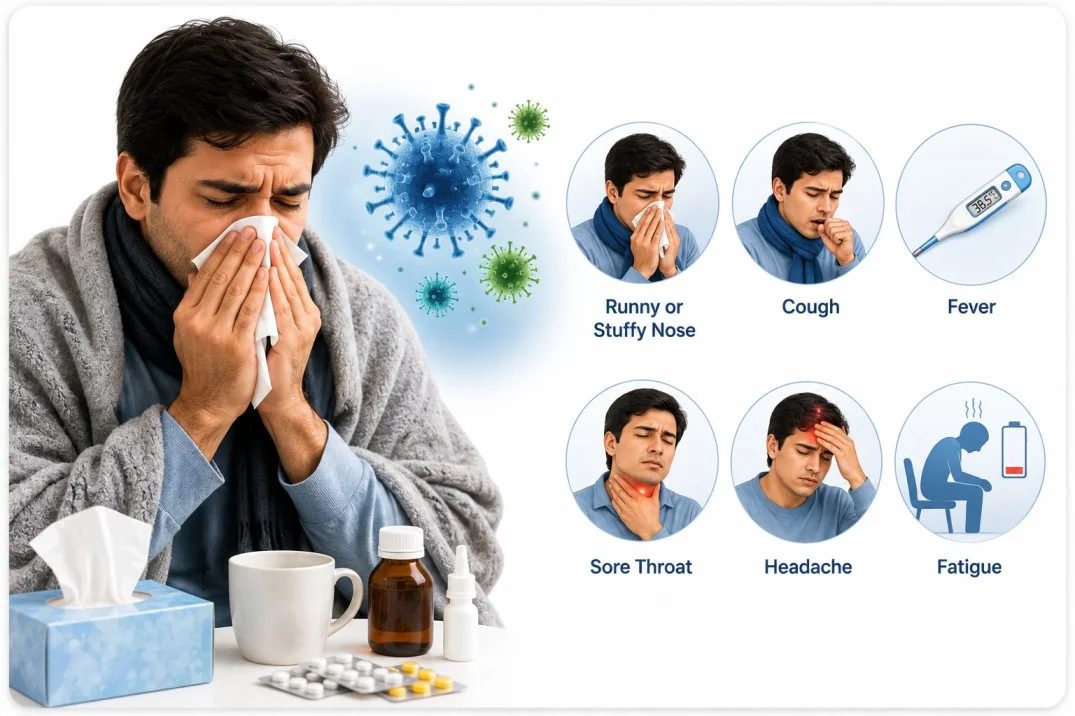
A contagious viral respiratory infection affecting the upper respiratory tract, causing symptoms such as nasal congestion, sore throat, cough, body aches, and fever.
Select the symptoms you are experiencing. We will route Normal Appointment, Urgent Request, or Emergency Guidance. This is navigation help, not a medical diagnosis.
The predominant viral pathogen responsible for 30% to 50% of common cold cases, infecting upper respiratory mucosa.
Highly contagious respiratory viruses responsible for seasonal flu outbreaks, attacking the respiratory tract lining.
Inhalation of microscopic infectious droplets generated when an infected individual coughs, sneezes, or speaks nearby.
indirect contact transmission by touching viral particles on surfaces (door handles, phones) and subsequently touching the eyes, nose, or mouth.
Temporary suppression of immune defenses, lack of sleep, or close indoor crowding during colder seasons that accelerates viral spread.
Evaluation of upper respiratory tract symptoms, throat irritation, nasal mucosa congestion, and listening to lung sounds using a stethoscope to rule out lower respiratory involvement.
A quick nasal or throat swab test that detects influenza viral antigens within 15 to 30 minutes to confirm or rule out flu strain activity.
A highly sensitive multi-virus PCR swab test is used to differentiate between influenza A/B, SARS-CoV-2 (COVID-19), and respiratory syncytial virus (RSV).
Performed when severe sore throat or swollen tonsils are present to check for bacterial Group A Streptococcus infection (strep throat) vs. viral infection.
Conducted in high-risk or severe cases to measure blood oxygen saturation levels and rule out secondary bacterial complications like pneumonia.
Rest at home to conserve energy, allow your body’s immune system to fight off the viral infection, and prevent spreading it to others.
Drink plenty of fluids such as warm water, clear broths, herbal teas with honey, or electrolyte solutions to soothe the throat and prevent dehydration.
Dissolve 1/2 teaspoon of salt in a glass of warm water and gargle for 30 seconds multiple times daily to reduce throat swelling, pain, and mucus buildup
Inhale warm steam from a bowl/shower or use nasal saline drops/sprays to loosen thick nasal congestion and moisten dry, irritated airway passages.
Seek immediate emergency medical assistance if experiencing severe shortness of breath, persistent chest pain/tightness, bluish lips/face, or sudden confusion.
Educational information only — not a personal prescription. Always consult a qualified clinician.
Acetaminophen or NSAIDs (such as ibuprofen) to reduce fever, soothe throat irritation, and alleviate body aches and headaches.
Oral decongestants or short-term decongestant nasal sprays to reduce swelling in nasal blood vessels and clear sinus congestion.
Antiviral drugs (such as Oseltamivir/Tamiflu) are prescribed for severe influenza cases, most effective when started within 48 hours of symptom onset.
Adequate bed rest combined with high fluid intake (water, warm broths, and herbal teas) to maintain hydration and support immune system recovery.
Warm steam inhalation or cool-mist room humidifiers to loosen thick nasal secretions and soothe irritated airway mucous membranes.
Wash hands thoroughly with soap and water for at least 20 seconds, or use an alcohol-based hand sanitizer with at least 60% alcohol, especially after being in public places or coughing/sneezing.
Receive an annual influenza vaccination to significantly reduce the risk of flu infection, lessen symptom severity if infected, and protect high-risk populations.
Cover your mouth and nose with a tissue or the inside of your elbow when coughing or sneezing, and dispose of used tissues immediately.
Avoid touching your eyes, nose, and mouth with unwashed hands, and maintain distance from individuals showing active upper respiratory symptoms.
Clean and disinfect frequently touched objects and surfaces—such as door handles, smartphones, keyboards, light switches, and countertops—to prevent contact transmission.
Drink plenty of warm fluids such as herbal teas with honey, clear chicken or vegetable broths, and water to keep throat mucosa moist, thin out nasal secretions, and replace lost fluids.
Avoid intense workouts while symptomatic or febrile; limit physical activity to gentle stretching or light walking once fever subsides to prevent physical exhaustion.
Prioritize 7 to 9 hours of restorative sleep daily to empower immune recovery, and run a cool-mist room humidifier to relieve nasal congestion and dry throat tissues.
Avoid tobacco smoke, secondhand smoke, and alcohol, which irritate respiratory passages and dehydrate the body. Do not take antibiotics, as they cannot treat viral cold or flu viruses.
Stay home from work or school while symptomatic to prevent spreading the virus, cover coughs and sneezes with tissues, and sanitize frequently touched objects and hands.
Continuous high body temperature lasting more than 3 to 4 days that does not respond to standard over-the-counter antipyretic medications.
A severe return of high fever, intensified cough, or sinus pain after cold/flu symptoms had started to abate, indicating a secondary bacterial infection.
Severe difficulty breathing, rapid shallow breathing, continuous wheezing, or painful inspiration indicating potential viral or bacterial pneumonia.
Heavy pressure, localized pain, or severe tightness in the chest region when breathing or coughing.
Sudden confusion, severe lightheadedness, inability to arouse/stay awake, or blue/gray discoloration of the lips and skin due to low blood oxygen.
Based on the selected health concern, these specialists may be relevant. General Medicine is listed as a starting point for Common Cold / Flu — this is navigation help, not a diagnosis.
Care paths: Normal Appointment · Urgent Request · Emergency Guidance.
MBBS, MD (Pediatrics), DCH
Available today
MBBS, MD (General Medicine)
Available today
MBBS, MD General Physician & Diabetologist
MBBS MD, Anaesthesia
MD - Pulmonary Medicine, Sleep Medicine Specialist
MBBS, MD, Pediatrics
Mumbai
Hyderabad
General Care
₹1,499
Saathora provides healthcare information to help you understand conditions and find care. It is not a substitute for professional medical advice, diagnosis, or treatment.
Completed appointment → Eligible for review. This becomes a Verified Patient Review for the doctor and hospital of this visit.
Accessibility details not listed yet.
Elderly priority assistance is available. Booked appointment times stay the same.
Saathora assistant
