
DR. NIHARIKA TENTU
MBBS, DDVL (Dermatology)
- Experience: 9 years
- Hospital: Hope Wellness Hospital
- Fee: ₹1,000
- Rating: ★ 5.0
Available today
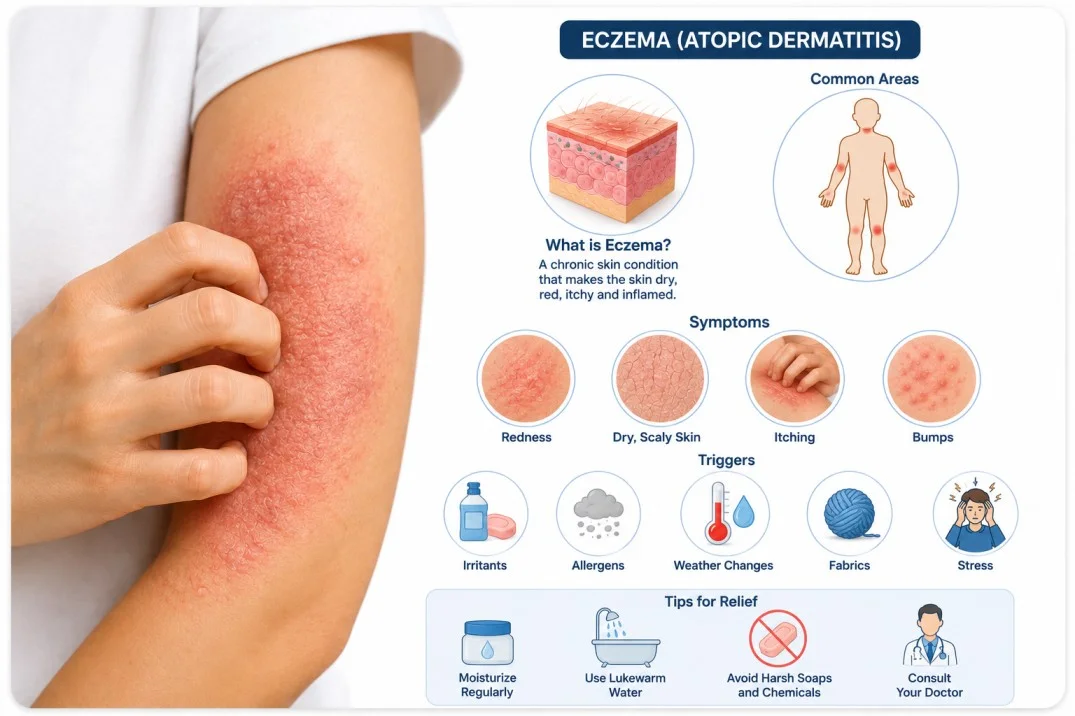
A non-contagious inflammatory skin condition characterized by dry, itchy, red, and irritated skin patches that can blister, ooze, or become thickened over time.
Select the symptoms you are experiencing. We will route Normal Appointment, Urgent Request, or Emergency Guidance. This is navigation help, not a medical diagnosis.
Inherited genetic variations affecting filaggrin protein production, which weakens the skin's outer epidermal barrier and allows moisture loss and allergen penetration.
An overactive immune response where skin T-cells react excessively to minor environmental irritants, triggering chronic inflammation and localized tissue swelling.
Frequent contact with harsh soaps, alkaline detergents, synthetic fragrances, household solvents, or wool fabrics that strip natural protective skin lipids.
Exposure to dust mites, pet dander, mold spores, seasonal pollens, or specific food proteins that stimulate allergic immune pathways and provoke eczema flare-ups.
Elevated stress hormones (cortisol) and rapid changes in temperature, cold dry air, or excessive perspiration that trigger or aggravate skin inflammation.
A detailed visual assessment by a dermatologist to evaluate characteristic skin lesions, distribution patterns, and gather personal and family history of atopic conditions (asthma, hay fever, eczema).
Application of small amounts of common environmental or chemical allergens under patches on the back for 48 hours to identify or rule out allergic contact dermatitis.
Removal and microscopic examination of a small skin sample to rule out other inflammatory or malignant dermatological conditions, such as psoriasis, lichen planus, or cutaneous lymphoma.
Laboratory measurement of circulating Immunoglobulin E (IgE) antibody levels in the blood to assess overall allergic sensitization and immune reactivity.
Swabbing active, weeping, or crusted skin lesions to test for secondary bacterial (such as Staphylococcus aureus) or viral (Herpes simplex) infections.
Apply a cool, damp cloth or compress to the itchy or inflamed skin area for 5–10 minutes to soothe irritation and reduce the urge to scratch.
Wash the area gently with lukewarm water and a fragrance-free, soap-free cleanser. Avoid hot water and harsh scrubbing, as they strip moisture from the skin.
Pat the skin dry lightly (leaving it slightly damp) and immediately apply a thick, fragrance-free cream or ointment (like petrolatum) to lock in hydration
Cover the treated area with soft, breathable cotton clothing to prevent direct contact with external irritants, allergens, or accidental scratching.
Monitor for Infection
Educational information only — not a personal prescription. Always consult a qualified clinician.
Apply thick, fragrance-free creams or ointments (such as petroleum jelly or ceramides) immediately after bathing to repair the skin barrier and maintain hydration.
Use prescribed topical hydrocortisone or stronger corticosteroid creams during flare-ups to reduce itching, swelling, and redness.
Apply topical calcineurin inhibitors (e.g., tacrolimus or pimecrolimus) or non-steroidal ointments to sensitive areas like the face and eyelids where steroid use is limited.
Expose the affected skin to controlled doses of narrow-band ultraviolet B (UVB) light under medical supervision for moderate-to-severe eczema unresponsive to topicals.
For severe cases, use targeted biologic injections (such as dupilumab) or oral immunosuppressants as prescribed by a dermatologist to control underlying inflammation.
Apply a thick moisturizer, ointment, or cream at least twice daily—especially right after bathing—to lock in moisture and reinforce the skin's protective barrier.
Take note of factors that worsen flare-ups (such as harsh soaps, detergents, wool or synthetic fabrics, pet dander, pollen, or stress) and minimize exposure.
Take short baths or showers using warm (not hot) water, and use mild, fragrance-free, non-soap cleansers instead of harsh antibacterial or scented soaps.
Wear loose-fitting clothes made from soft, natural fibers like 100% cotton, and wash new clothes with mild, dye-free detergents before wearing them.
Use a humidifier in dry conditions or air-conditioned spaces to prevent low humidity from drying out the skin, and keep indoor temperatures cool to minimize sweating.
Eat a balanced diet rich in omega-3 fatty acids (like salmon, flaxseeds, and walnuts), antioxidants, and colorful vegetables to help manage systemic inflammation.
Avoid high-sugar, heavily processed foods and known personal food allergens (such as dairy, eggs, soy, or nuts if diagnosed) that may spark eczema flare-ups.
Stress is a common trigger for eczema flare-ups. Engage in regular mindfulness, deep breathing exercises, yoga, or meditation to keep stress levels under control.
Exercise in cool environments to minimize heavy sweating, which can irritate sensitive skin. Shower immediately after physical activity with lukewarm water and reapply moisturizer.
Drink plenty of water throughout the day to support skin hydration from within, and prioritize 7–9 hours of restful sleep nightly to support overall skin repair and immune health
localized inflammation that becomes noticeably warmer, redder, or slightly more swollen than typical eczema patches.
Development of open sores, yellowish crusts, or fluid-filled blisters that indicate a potential secondary bacterial infection (such as Staphylococcus).
Rapid onset of painful, fluid-filled blisters accompanied by high fever, chills, or systemic illness, which may indicate a serious viral infection.
Intense, uncontrollable itching that causes persistent insomnia, skin damage from scratching, or significant impairment to daily activities and mental well-being.
Rapidly spreading skin redness, high fever, confusion, rapid heart rate, or lethargy stemming from a severely infected skin lesion.
Based on the selected health concern, these specialists may be relevant. Dermatology is listed as a starting point for Eczema — this is navigation help, not a diagnosis.
Care paths: Normal Appointment · Urgent Request · Emergency Guidance.
MBBS, DDVL (Dermatology)
Available today
Bangalore
General Care
₹1,499
Saathora provides healthcare information to help you understand conditions and find care. It is not a substitute for professional medical advice, diagnosis, or treatment.
Completed appointment → Eligible for review. This becomes a Verified Patient Review for the doctor and hospital of this visit.
Accessibility details not listed yet.
Elderly priority assistance is available. Booked appointment times stay the same.
Saathora assistant
