DR. NAZIM KAJANI
MBBS, MS (Ortho/OSM) Trauma and accident care Rheumatology Chronic Pain Management
- Experience: 14 years
- Hospital: St. Jude Medical Center
- Fee: ₹1,500
- Rating: ★ 5.0
Available today
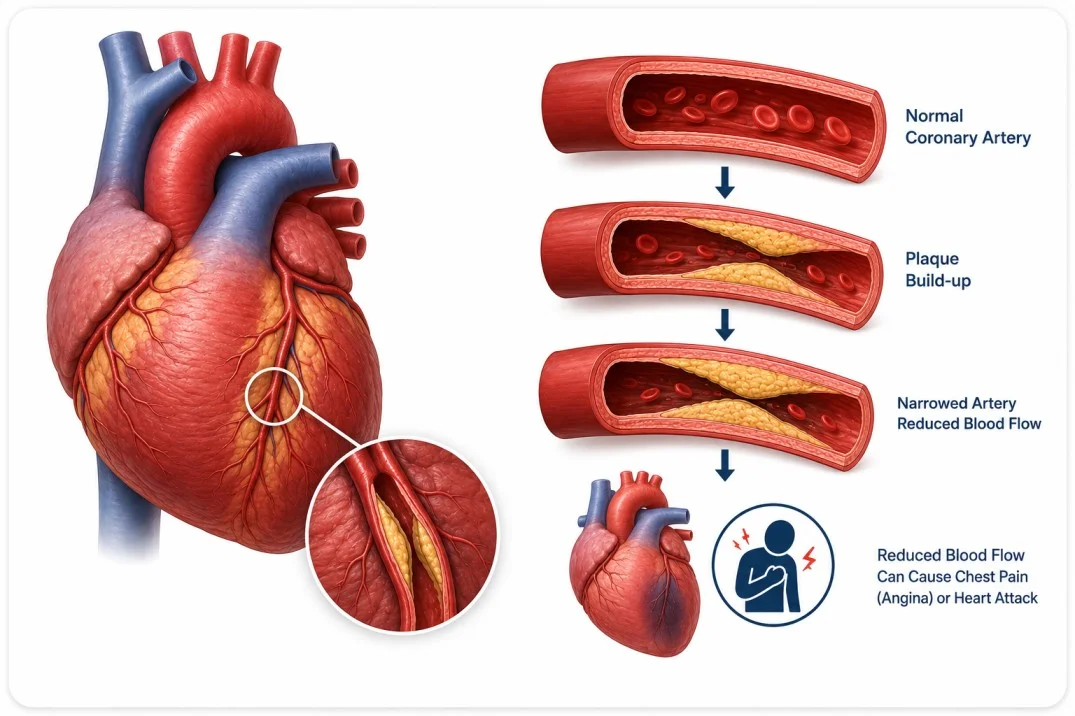
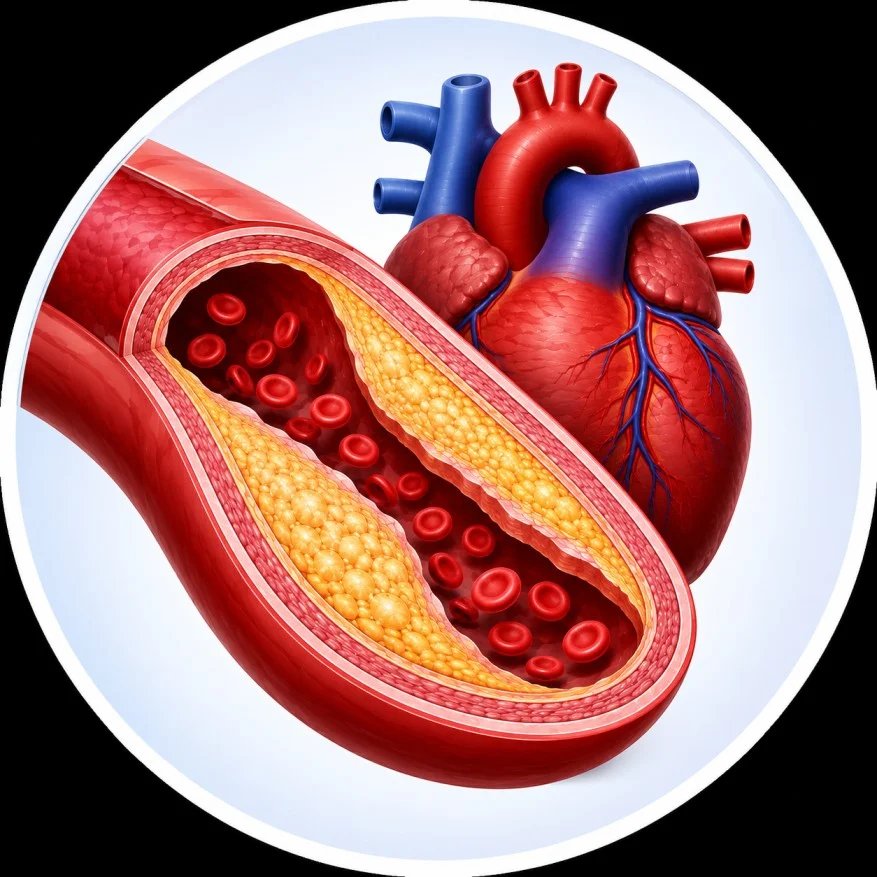
A cardiovascular condition characterized by the narrowing or blockage of the coronary arteries due to plaque buildup (atherosclerosis), reducing blood flow and oxygen to the heart muscle.
Select the symptoms you are experiencing. We will route Normal Appointment, Urgent Request, or Emergency Guidance. This is navigation help, not a medical diagnosis.
The primary cause of CAD involves progressive accumulation of fatty deposits, cholesterol, and calcium along the inner lining of coronary arterial walls.
Chronic elevated blood pressure that damages, hardens, and narrows coronary arteries over time, increasing workload on the heart.
High circulating levels of low-density lipoprotein (LDL) cholesterol that penetrate arterial walls and accelerate plaque formation.
Chemical toxins in tobacco smoke that cause endothelial vascular damage, promote blood clotting, and trigger arterial constriction.
Sustained high blood sugar levels that accelerate endothelial damage and plaque accumulation within the coronary blood vessels.
Records the electrical signals of the heart to identify abnormal heart rhythms, previous heart attacks, or ongoing myocardial ischemia (lack of oxygen flow).
Uses sound waves to produce real-time moving images of the heart, evaluating chamber structure, valve health, wall motion abnormalities, and overall pumping capacity (ejection fraction).
Monitors ECG readings, heart rate, and blood pressure while walking on a treadmill or riding a stationary bike to evaluate how well the heart performs under physical stress and detect blockages.
A non-invasive specialized CT scan with intravenous contrast dye that creates detailed 3D images of the coronary arteries to detect calcified and non-calcified arterial plaque buildup.
The definitive gold-standard diagnostic procedure where a catheter is routed to the coronary arteries and X-ray contrast dye is injected to pinpoint the exact location and severity of blood vessel blockages.
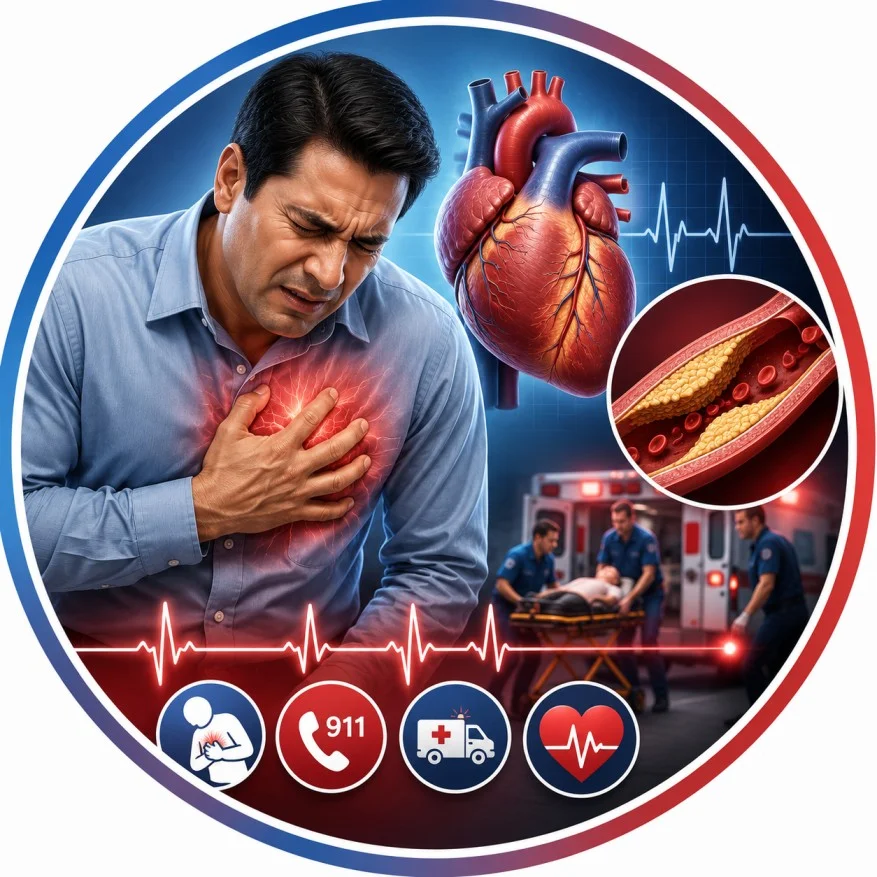
Dial local emergency services (108 / 911) immediately at the first onset of severe chest pain, pressure, or symptoms of a suspected heart attack.
Have the person stop all physical activity and sit down comfortably, leaning slightly forward with their back supported to minimize physical exertion and reduce heart workload.
Unbutton tight collars, loosen belts, and remove tight garments around the neck, chest, and waist to facilitate easier breathing.
If prescribed, assist the person in taking sublingual nitroglycerin. Alternatively, offer a standard adult aspirin (325 mg) to chew slowly, unless allergic or contraindicated.
Monitor breathing and pulse continuously; if the person becomes unresponsive or stops breathing, immediately initiate CPR and use an Automated External Defibrillator (AED) if available.
Educational information only — not a personal prescription. Always consult a qualified clinician.
Daily low-dose aspirin or P2Y12 inhibitors (such as clopidogrel) to prevent blood platelets from forming blood clots in narrowed coronary arteries.
A minimally invasive catheter-based procedure using a balloon to inflate narrowed coronary arteries and deploy a drug-eluting stent to restore blood flow.
Open-heart surgical intervention creating a bypass route around severely clogged coronary arteries using a vascular graft harvested from the leg or chest.
Daily low-dose aspirin or P2Y12 inhibitors (such as clopidogrel) to prevent blood platelets from forming blood clots in narrowed coronary arteries.
A structured program incorporating physician-monitored cardiovascular exercise, dietary education, stress management, and risk factor modification.
Emphasize whole foods rich in soluble fiber, antioxidants, and unsaturated fats—such as vegetables, fruits, legumes, whole grains, nuts, and oily fish—while significantly limiting saturated fats, trans fats, and added sugars.
Engage in at least 150 minutes of moderate-intensity aerobic exercise (such as brisk walking, cycling, or swimming) per week to promote endothelial function, lower arterial blood pressure, and boost HDL cholesterol.
Eliminate active cigarette smoking and avoid exposure to secondhand tobacco smoke to prevent ongoing chemical injury to the arterial endothelial lining and reduce blood clot formation risk.
Regularly measure and manage core cardiovascular biomarkers, ensuring blood pressure, LDL cholesterol, triglycerides, and blood glucose (HbA1c) remain within optimal target ranges.
Maintain a body mass index (BMI) within the healthy range and incorporate stress-reduction techniques—such as mindfulness, regular sleep schedules, and yoga—to minimize chronic sympathetic nervous system activation.
Focus on a diet rich in vegetables, fruits, whole grains, legumes, nuts, seeds, and extra virgin olive oil while incorporating omega-3 fatty acids from fish like salmon to reduce arterial plaque progression.
Engage in 30 minutes of moderate aerobic activity (such as brisk walking, swimming, or stationary cycling) 5 days a week following clearance from your cardiologist to strengthen cardiac muscle.
Practice daily relaxation techniques like mindfulness meditation, deep breathing exercises, or gentle yoga, and prioritize 7 to 8 hours of uninterrupted sleep to keep cortisol and blood pressure stable.
Avoid saturated and trans fats, packaged foods high in sodium, excessive alcohol, and all forms of tobacco smoke, which cause endothelial injury, promote vascular constriction, and raise blood pressure.
Take all prescribed cardiovascular medications (such as statins, blood thinners, and anti-hypertensives) consistently as directed, and attend routine cardiac follow-ups to monitor arterial health.
Chest pain or tightness that occurs more frequently, lasts longer, or is triggered by progressively less physical effort than previously experienced.
Sudden, overwhelming exhaustion or feeling drained during light, routine daily tasks like walking across a room or carrying light objects.
Significant shortness of breath occurring during minimal exertion or while sitting/lying down, indicating decreased cardiac output.
Severe, squeezing, or crushing pressure in the chest that radiates to the left arm, shoulder, neck, jaw, or upper back, indicating potential heart attack.
Profuse cold perspiration accompanied by extreme lightheadedness, nausea, rapid irregular pulse, or sudden fainting (syncope).
Based on the selected health concern, these specialists may be relevant. Cardiology is listed as a starting point for Coronary Artery Disease — this is navigation help, not a diagnosis.
Care paths: Normal Appointment · Urgent Request · Emergency Guidance.
MBBS, MS (Ortho/OSM) Trauma and accident care Rheumatology Chronic Pain Management
Available today
MBBS, MD (General Medicine)
Available today
MBBS, MD General Physician & Diabetologist
MBBS MD, Anaesthesia
Hyderabad
New Delhi
Cardiac Care
₹2,999
Executive
₹4,499
Discover minor lifestyle, diet adaptations and sodium control measures recommended by our cardiolgists to keep...
Read article →Detecting physiological variations early can lead to highly responsive therapy plans, avoiding emergency clini...
Read article →Saathora provides healthcare information to help you understand conditions and find care. It is not a substitute for professional medical advice, diagnosis, or treatment.
Completed appointment → Eligible for review. This becomes a Verified Patient Review for the doctor and hospital of this visit.
Accessibility details not listed yet.
Elderly priority assistance is available. Booked appointment times stay the same.
Saathora assistant