DR. KIRAN KUMAR
MBBS, MD (General Medicine)
- Experience: 8 years
- Hospital: MEDI STAR Hospital
- Fee: ₹600
- Rating: ★ 4.0
Available today
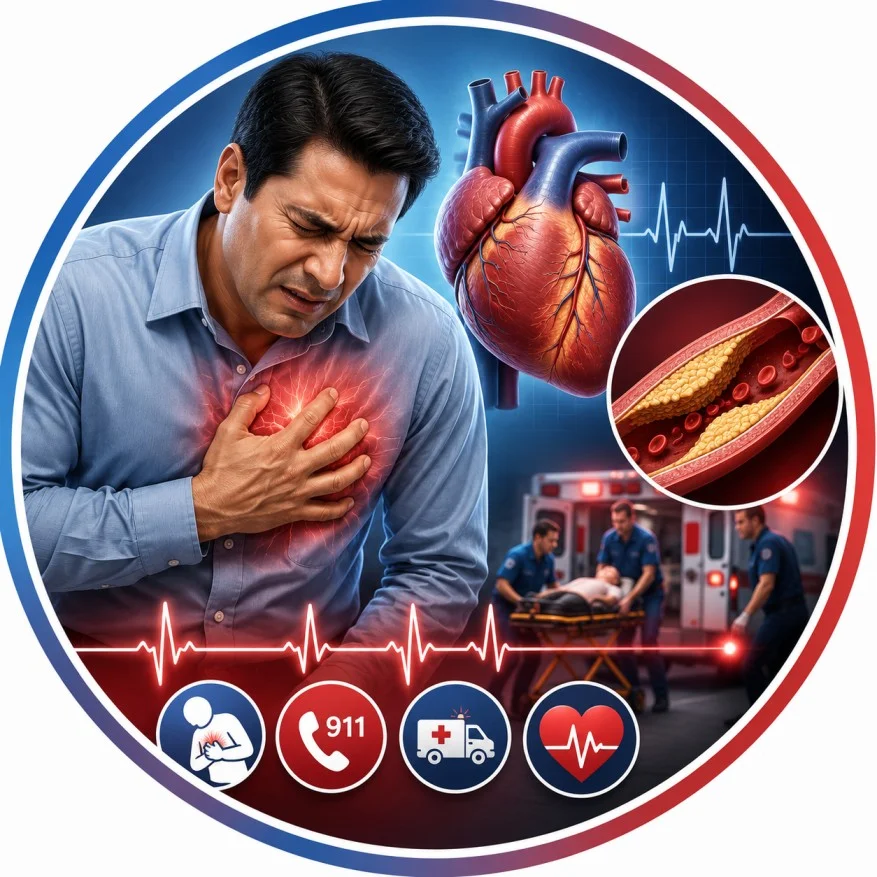
Select the symptoms you are experiencing. We will route Normal Appointment, Urgent Request, or Emergency Guidance. This is navigation help, not a medical diagnosis.
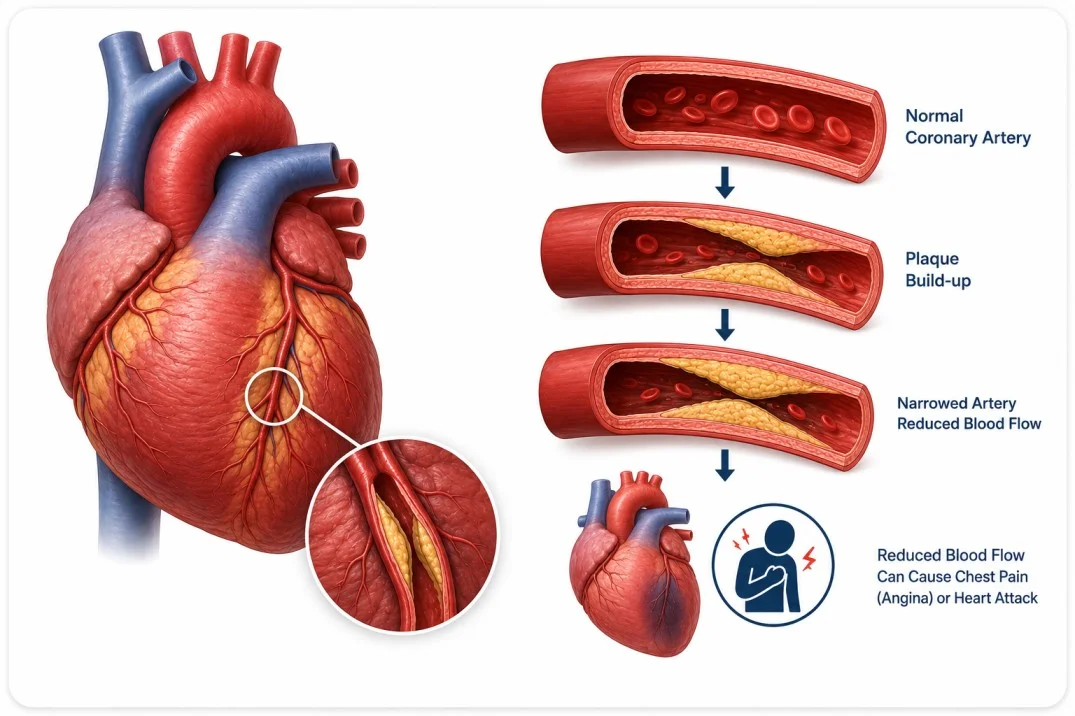
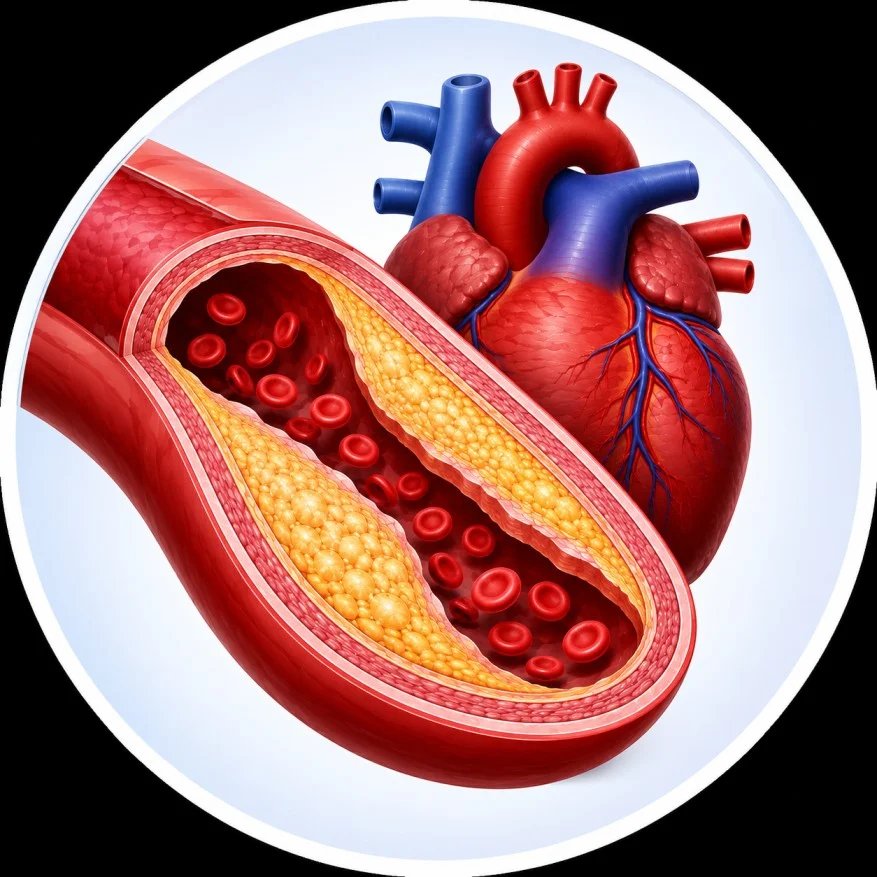
Build-up of fatty deposits (plaque) in the coronary arteries that supply blood to the heart muscle, leading to reduced blood flow or complete blockage.
Rupture of an atherosclerotic plaque inside a coronary artery, causing a blood clot to form and block blood flow to the heart tissue.
Sustained high blood pressure damages arteries over time, accelerating plaque accumulation and increasing the heart muscle's workload.
Elevated levels of low-density lipoprotein (LDL) cholesterol and triglycerides contribute to plaque formation in the coronary arteries.
Smoking or exposure to secondhand smoke damages blood vessel walls, increases blood clotting risks, and accelerates atherosclerosis.
Chronic high blood sugar damages blood vessels and nerves controlling the heart, significantly increasing the risk of cardiovascular disease.
Records the electrical activity of the heart to identify damaged heart muscle tissue, detect abnormal heart rhythms, and determine whether a STEMI or NSTEMI heart attack is occurring.
Measures specific blood proteins (like cardiac troponin) that leak into the bloodstream when heart muscle cells are damaged or dying due to ischemia.
Involves injecting a special dye into the coronary arteries via a catheter to visualize real-time blood flow on X-rays and pinpoint exact locations of arterial blockages.
Uses sound waves to create moving images of the heart, evaluating overall pumping function, wall motion abnormalities, and damaged muscle areas.
Provides clear visual images of the heart, lungs, and surrounding blood vessels to check heart size and rule out alternative causes of chest pain (e.g., fluid in lungs or aortic issues).
Dial your local emergency phone number (e.g., 911 or local ambulance service) right away. Never delay calling for emergency assistance if a heart attack is suspected.
Have the person sit down, rest, and try to stay calm. Position them in a comfortable position, such as sitting on the floor leaning against a wall, to reduce strain on the heart.
If the person is conscious, not allergic to aspirin, and has no contraindications, have them chew and swallow an adult aspirin (325 mg) or two low-dose aspirins (81 mg each).
Keep a close eye on the person's breathing and responsiveness. If they become unconscious and stop breathing normally, begin CPR immediately (hands-only CPR if not trained in rescue breaths) and use an Automated External Defibrillator (AED) if available.
Educational information only — not a personal prescription. Always consult a qualified clinician.
intravenous clot-busting medications (such as tissue plasminogen activator, or tPA) administered to dissolve blood clots blocking coronary arteries when emergency angioplasty is not immediately available.
Administration of aspirin, P2Y12 inhibitors (e.g., clopidogrel, ticagrelor), and heparin to prevent existing blood clots from growing larger and block new clot formation.
A minimally invasive emergency procedure where a catheter with a tiny balloon is inflated inside the blocked coronary artery to restore blood flow, followed by placing a mesh stent to keep the vessel open.
Open-heart surgical procedure where a healthy blood vessel from another part of the body (leg, arm, or chest) is grafted to reroute blood around severe or multiple coronary artery blockages.
Long-term prescription medications, including beta-blockers, ACE inhibitors/ARBs, and statins, to reduce heart workload, lower blood pressure, stabilize plaque, and prevent future cardiac events.
A medically supervised recovery program involving monitored exercise training, cardiovascular risk factor education, nutrition counseling, and emotional support.
Consume a balanced diet rich in fruits, vegetables, whole grains, lean proteins, and healthy fats while limiting saturated fats, trans fats, refined sugars, and high-sodium foods.
Aim for at least 150 minutes of moderate-intensity aerobic exercise (such as brisk walking, swimming, or cycling) per week to strengthen the heart and improve circulation.
Avoid smoking, vaping, and exposure to secondhand smoke to prevent blood vessel damage, and keep alcohol consumption to moderate levels or avoid it entirely.
Routinely monitor and manage blood pressure and lipid levels through lifestyle changes or prescribed medications to prevent plaque buildup in the arteries.
Maintain healthy blood glucose levels through proper diet, regular exercise, and medication management to minimize vascular damage associated with diabetes.
Practice stress-reduction techniques like mindfulness or deep breathing, ensure adequate sleep, and maintain a healthy Body Mass Index (BMI) to reduce strain on the cardiovascular system.
Emphasize fruits, vegetables, whole grains, nuts, seeds, and lean proteins like fish. Minimize saturated fats, trans fats, refined carbohydrates, and added sugars.
Restrict daily sodium intake (aim for under 2,000 mg per day) by avoiding processed foods, canned soups, and heavy table salt to manage blood pressure.
Participate in medically supervised exercise training initially, gradually working up to 150 minutes per week of moderate aerobic activity like walking.
Avoid all forms of tobacco, vaping, and secondhand smoke exposure, as nicotine constricts blood vessels and significantly increases recurrent heart attack risks.
Avoid heavy alcohol consumption, ultra-processed foods, fried items, and sugary beverages that contribute to weight gain, high cholesterol, and hypertension.
Maintain a healthy body weight, practice daily stress management techniques (meditation, deep breathing), and prioritize 7 to 8 hours of quality sleep nightly.
Intense pressure, tightness, heavy squeezing, or crushing sensation in the center or left side of the chest lasting more than a few minutes.
Sharp or aching pain radiating from the chest out to the left arm, shoulder, neck, jaw, or upper back.
udden difficulty breathing or intense feeling of suffocating, which may occur alongside or independent of chest pain.
Breaking out into a sudden profuse cold sweat accompanied by dizziness, fainting, or sudden loss of balance.
Unexpected nausea, vomiting, or deep burning discomfort in the upper stomach area that mimics severe indigestion.
Based on the selected health concern, these specialists may be relevant. Cardiology is listed as a starting point for Myocardial Infarction (Heart Attack) — this is navigation help, not a diagnosis.
Care paths: Normal Appointment · Urgent Request · Emergency Guidance.
MBBS, MD (General Medicine)
Available today
MBBS, MD General Physician & Diabetologist
MBBS MD, Anaesthesia
MBBS, MS (Ortho/OSM) Trauma and accident care Rheumatology Chronic Pain Management
Hyderabad
New Delhi
Cardiac Care
₹2,999
Executive
₹4,499
Discover minor lifestyle, diet adaptations and sodium control measures recommended by our cardiolgists to keep...
Read article →Detecting physiological variations early can lead to highly responsive therapy plans, avoiding emergency clini...
Read article →Saathora provides healthcare information to help you understand conditions and find care. It is not a substitute for professional medical advice, diagnosis, or treatment.
Completed appointment → Eligible for review. This becomes a Verified Patient Review for the doctor and hospital of this visit.
Accessibility details not listed yet.
Elderly priority assistance is available. Booked appointment times stay the same.
Saathora assistant